Travel
Road Trip With Your Dog: Car Safety and Emergency Kit
Published September 13, 2026Last reviewed September 16, 2026
A dog loose in a moving car is a hazard for everyone in it. This guide explains the restraint options that actually protect a dog in a crash, the rest-stop rhythm that keeps trips comfortable, the hot-car rules that are non-negotiable, and an emergency kit where every item has a real purpose.
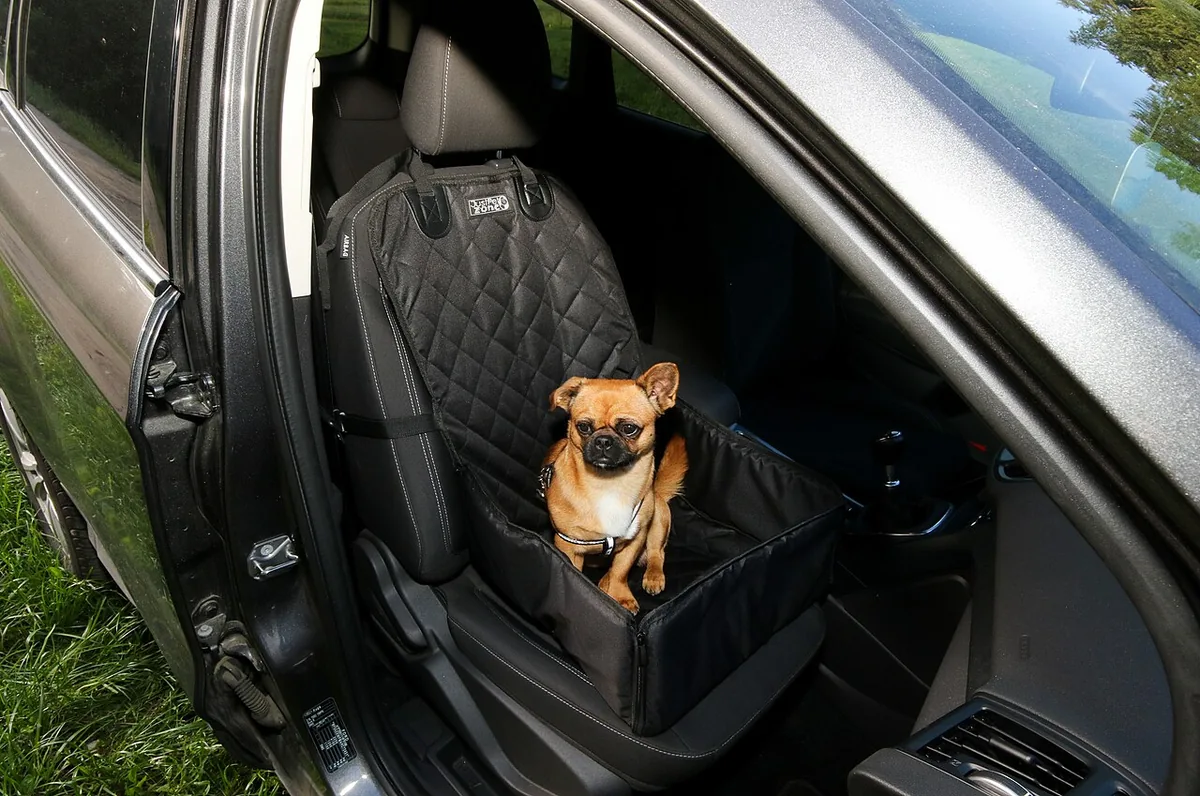
Set up before you leave
- Secure the dog
- Plan rest stops
- Build the kit
- Check the weather
The trip starts on a Tuesday, which is the first mistake if you haven't planned for it. You packed the cooler, charged the phone, and the dog is bouncing by the front door, ready for whatever "car ride" means today. Ten hours later you are three states away, the dog has been loose the whole way, and somewhere around hour six you realize there was never a plan for what to do if she started panting hard and wouldn't settle.
Most dog road trips end fine on luck. The ones that do not usually fail for predictable reasons, because nobody settled three questions before leaving: how the dog would be held in the car, how the day would be paced, and what was actually inside the bag when something went wrong. This guide walks through those three decisions in order, from the seat setup to the stop rhythm to the kit you can actually use.
Set up the car before the trip
The first decision is how your dog rides, and it belongs before the trip, not at the curb. A crate is the safest choice for most dogs. The ASPCA's own travel guidance calls for a well-ventilated crate that lets your dog stand, turn around, sit and lie down, fixed in place so it cannot slide or shift on an abrupt stop. A loose crate turns into a projectile in a collision, and a heavy one at that. Metal crates often feel more solid than soft-sided ones over a long day on the highway, though they take up more trunk and back-seat room. Whichever you choose, the mounting hardware matters as much as the crate itself, because a great crate that moves is worse than no plan at all.
No crate? Keep the dog in the back seat, restrained. If you skip the crate, do not let the dog ride loose or hang its head out of the window. Use a harness clipped to a secured seatbelt, always in the back seat. The front seat is out of bounds entirely, the passenger airbag zone is no place for a pet, and most pet car-safety guidance recommends the back seat with or without a harness.
Two rules here never bend:
- Never let a dog ride unrestrained, an emergency stop throws a loose dog into the windshield, the seats, or you.
- Never leave your dog alone in a parked car. On a hot day, even with windows open, a parked car becomes a furnace and heatstroke can develop. In cold weather the same car holds the cold in like a refrigerator.
The details matter more than the equipment itself. A crate that slides sideways on a hard stop is a hazard wearing a label, so anchor it until a hard pull on the straps does not move it. For seatbelt attachments, use a harness, never a collar, because a collar puts the full force of a sudden stop onto your dog's neck. Test the whole setup the week before you leave. Install it, yank the straps for real, and take a ten-minute drive to watch whether your dog settles in or paces the whole way. A dog that is nervous in the setup at home will not calm down on the highway.
Plan the driving day
A driving day runs on a rhythm set before you back out of the driveway.
- Practice first. Take your dog on a few short drives before the trip and gradually lengthen them, so the car is familiar rather than a surprise. Two ten-minute loops around the block beat one long drive on departure day.
- Feed light, feed early. A light meal three to four hours before departure, not in a moving vehicle. Pack bottled water, water from an area your dog is not used to can upset its stomach.
- Set a stop rhythm. A common planning rhythm is a stop every two to three hours, and sooner if your dog is restless. Stop before you need to: let the dog move, drink, and relieve itself at each break. This is planner guidance rather than a hard rule, your dog's signals set the pace.
- Plan around the weather, not through it. On an 85°F day, the temperature inside a car with the windows slightly open can reach 102°F within 10 minutes, and 120°F after 30 minutes, which is why the answer is never "just a quick errand." High humidity makes heat even harder for dogs to handle, and short-nosed breeds struggle more in hot conditions.
- Know the warning signs, don't guess. Learn the early signs of heatstroke from a veterinary source before you go, heavy panting, drooling, weakness, unsteadiness. If you are ever concerned, the correct move is to head to the nearest veterinarian, not to attempt treatment yourself.
If the route crosses a hot region, take the long leg in the morning while it is still cool, and aim your midday stop at air-conditioned buildings. Dogs cool down by panting, not sweating, so still and humid air is their hardest environment. A short-nosed dog that has overheated once needs a gentler plan for every later leg of the trip.
If the trip runs past one day, the overnight decides how day two goes. Book pet-friendly lodging before you leave, the hotel and rental pet policies guide covers the questions that matter, and confirm whether the dog can stay in the room alone while you eat. Give the dog a real walk and a final chance to relieve itself before bed, in the dark if that is when you arrive. A dog that slept badly is a restless traveler by breakfast, and a restless traveler drags down the whole next leg.
Build a real emergency kit
Pack the kit before you leave, not on departure morning. Every item below has a named job.
| Item | Its purpose |
|---|---|
| Printed emergency numbers | Your vet, plus 24-hour clinics along the route, so nobody is searching a phone in the middle of a crisis. |
| Vaccination and rabies records | Some states require proof at certain interstate crossings, and any vet you visit will ask. |
| Health certificate if required | Check with your vet whether your route needs a certificate of veterinary inspection for interstate travel. |
| Bottled water and a collapsible bowl | Hydration at stops without the stomach upset unfamiliar tap water can cause. |
| Portioned light meal and treats | Keeps the feeding schedule going without feeding in a moving vehicle. |
| Routine medication plus written vet instructions | Keeps medication on schedule, and gives an unfamiliar vet the right context fast. |
| Leash, spare collar or harness, temporary ID tag | Escape prevention. Tags come off, harnesses break, and a spare set covers both. |
| Waste scoop and bags | Leave every stop clean, for other travelers and for the next dog that uses the spot. |
| Towels | Mud, rain, spilled water, hot asphalt, a wipe-down before the dog re-enters the car. |
| Blanket or familiar toy | Comfort, and a clean barrier between the dog and the car seat. |
| First-aid basics chosen with your vet | For minor issues only. This is not a substitute for veterinary care, and it is not a license to treat injuries yourself. |
| Document pouch with microchip number and emergency contact | One grab in a hurry, the numbers a stranger would need if something happened to you. |
| Power bank and phone cable | Maps, vet lookups and calls when the car is off. |
One habit keeps the kit honest, open it at every other stop and count what you used. A towel that ended up at the beach is a hole in the kit, not a decoration. Restock the water bottle whenever you fill your own.
Motion sickness, nervous travelers, and the day itself
A dog that rides badly can usually be helped, but the help starts before the engine. Carsickness often shows up as drooling, lip-licking, whining, or vomiting, while a dog that simply hates the car tends to go still and tuck its posture first, without noise. The first tool is repetition. Short, pleasant drives to the park or the drive-through, each ending in something good, teach the car to mean "trip" instead of "trouble." Dogs that watch the horizon or look forward out of the windshield often travel better than dogs staring at the side door, and on a winding road a cracked window beats a sealed cabin.
Position in the car matters more than most owners expect. A dog facing sideways watches a wall of passing scenery and feels the motion harder, while a crate or harness that lets the dog face forward, or lie down with the front in view, settles many carsick travelers. Keep the cabin cool and quiet, music low, no sudden stops, and bring a blanket that smells like home rather than like the back of a van.
If your dog gets sick or panics every single time, talk to your veterinarian before the trip. Motion-sickness medication exists, but it is not something to improvise, and sedation is not a travel plan. Ask what fits your dog's age, breed and health.
On departure morning, take the dog for a real walk first. A tired dog rides better, and a dog that has relieved itself will not be asking to stop at the first mile marker. Keep the leash in hand before you open any car door, rest-stop parking lots are loud, full of strangers, and the worst place to test a recall.
Weather rules worth repeating
- Hot day, parked car, windows cracked, air conditioning running: still no. The ASPCA says never leave an animal alone in a parked vehicle, period.
- Asphalt heats up and can burn paw pads, walk on grass when the ground is hot. A practical check: press the back of your hand to the pavement for five seconds. If it is too hot for your hand, it is too hot for paws.
- A cold car is not safer: in cold weather the vehicle holds the cold in, and a dog can freeze.
- If your plan ever involves leaving the dog in the car even briefly on a warm or cold day, change the plan.
Common mistakes at rest stops and on the road
The riskiest moment of the whole trip is usually not the driving, it is the door. A dog that bolts out of a parked car at a busy rest area has a short runway in every direction, so leash first, then door, every single time. Food is a close second. Kibble tossed into the back seat "to keep her quiet" at hour six is how a car seat and a stomach both end up in trouble, so stick to the pre-trip meal plan and keep treats small.
Identity fails quietly. A collar tag carrying only your home address does nothing when you are 400 miles away, so add a temporary travel tag with your cell phone and your destination number, the ASPCA suggests exactly this, and confirm your microchip registration is current before you leave.
The last failure sits in your hand: the leash. A retractable lead at a busy rest stop puts the dog in the path of traffic, other dogs and moving doors before you can react, so use a fixed leash and keep it short enough that the dog cannot reach the parking lane.
Before you leave: the ten-minute check
Do it the evening before, while there is still time to fix things.
- Microchip is registered and tags are on, with the destination number added.
- Vaccination records, and the health certificate if your route or vet says one is needed.
- Emergency kit is packed and the water bottle is full.
- Meal timing is set so departure is three to four hours after a light meal.
- The crate or harness is installed and the securing straps are tested with a hard pull.
- A vet clinic near your overnight stop is saved in your phone, found before the trip, not in the dark.
- The phone is charged and the power bank is in the door pocket.
Questions dog owners ask before a long drive
My dog throws up on every car ride. Is there anything that actually helps? Start with short, frequent practice drives and a light meal three to four hours before departure. Crack a window for fresh air, and keep the dog facing forward rather than sideways on winding roads. If the pattern continues, ask your vet about anti-nausea medication well before the trip.
Is it okay for my dog to ride with her head out the window? No. Debris, insects, and the risk of jumping or falling are the obvious reasons, and the quiet one is that a dog leaning out of a window is not held by anything. Keep the window mostly closed and the harness on.
Can I leave my dog in the car with the AC running while I run a quick errand? No. Air conditioning can fail, and a parked car does not stay cool for long. The never-leave-the-dog rule has no temperature exception, and neither ASPCA guidance nor this site makes one.
How often should we stop on a long drive? Every two to three hours, and sooner if your dog is restless. A dog that gets to move, drink and relieve itself at each stop is a better traveler for the next leg.
What if my dog panics in the crate? Practice at home first, meals in the crate, short sessions with the door open, then ten-minute drives. If panic continues, a harness and seatbelt setup may suit your dog better than a crate, and your vet can help you choose.
We're stopping overnight. What should I plan? Book the hotel before you leave, confirm whether the dog can stay alone in the room, and make sure the emergency kit covers the overnight too, towels, food, water, and the leash for a last walk in the dark. The hotel-policy questions that matter are in the hotel and rental guide.
Where this guide's facts come from
- ASPCA, "Travel Safety Tips", https://www.aspca.org/pet-care/general-pet-care/travel-safety-tips
- AVMA, "Emergency Care", https://www.avma.org/resources-tools/pet-owners/emergency-care
- AVMA, "Microchipping", https://www.avma.org/resources-tools/pet-owners/petcare/microchipping
- AKC, "Lifestyle", https://www.akc.org/expert-advice/lifestyle/
- Ready.gov, "Pets", https://www.ready.gov/pets
- American Red Cross, "Pet Disaster Preparedness", https://www.redcross.org/get-help/how-to-prepare-for-emergencies/pet-disaster-preparedness.html
- Rest-stop rhythm, travel-tag habits and kit-item notes are editorial guidance from this site, not statements from the sources above, adjust them to your dog and your route.
Nothing on this page replaces a conversation with your veterinarian. The car-safety and travel advice here is general information, not medical guidance, so run any health, feeding, or medication questions past the vet who knows your dog. If you suspect an emergency while on the road, call your vet or the nearest emergency animal clinic right away.