Daily Care & Feeding
Grooming Basics at Home: Brushing, Nails and Ears
Published September 16, 2026Last reviewed September 16, 2026
Grooming is mostly maintenance, not perfection. Fifteen minutes twice a week covers the brushing, the nails and the ear checks that keep a pet comfortable, and the tools for all three cost less than a single professional session.
Three grooming rules, in order
- Rule 1 · Three tools
- Rule 2 · Fifteen minutes, twice a week
- Rule 3 · Stop at the first sign of trouble
The clippers sit unused in the drawer because nobody is sure how to start. The long-haired cat collects mats behind the ears, and the dog's nails click on the kitchen floor. Grooming at home does not need to be a production. It needs three tools, a calm fifteen minutes twice a week, and the willingness to stop at the first sign of trouble. Brushing, nail care and ear checks are the whole job for most pets, and every one of them is a skill you can learn at home.
What a home routine covers
A home grooming routine has three tasks. Brushing keeps the coat free of loose hair, mats and tangles. Nail trims keep the feet comfortable and the walk natural. Ear checks catch redness, dirt or odor before they become an infection. None of these is cosmetic. A matted coat pulls at the skin, overgrown nails change how a dog walks and can snag on carpet, and an ear problem left alone only gets more painful.
There is a fourth benefit that gets less attention.
Pets handled gently on a regular basis are easier to examine, easier to medicate and calmer at the vet. The weekly grooming session is practice for being touched, and that pays off in ways that have nothing to do with the coat. Vets notice the difference, and so does the pet. Short weekly sessions beat one long monthly session, because the short ones never give the pet a chance to get fed up. Grooming works best when it is a fixed part of the week, same day, same spot, same tools, rather than something that happens whenever there is time.
The tools
The tool list is short. A brush that suits the coat, nail clippers designed for pets, and your own eyes and hands for the ears. A slicker brush works for many medium and long coats, a rubber curry or a soft bristle brush suits short coats, and a metal comb catches what the brush misses. Nail clippers come in guillotine and scissor styles, and both do the job when they are sharp. Add treats, and the kit is complete.
Where the tools live matters too.
A grooming kit that stays in one place, with the brush and clippers ready, makes the routine automatic. A kit buried in a closet makes every session a project. Ten minutes of setup saved on a Saturday morning is ten minutes the pet spends being brushed instead.
Good tools do not have to be expensive.
A decent brush and a pair of clippers cost less than one professional grooming visit, and they last for years if the blades stay sharp. The one place not to save is the clippers, because a dull blade crushes the nail instead of cutting it, and that hurts.
Replace or sharpen them when they stop cutting cleanly.
Brushing: dogs and cats
Dogs
Brushing frequency depends on the coat, and the short version is that longer coats need more of it. A short-coated dog can often get by with a weekly pass. A double-coated or long-coated dog needs brushing every few days, and daily attention during shedding season. Brush in the direction the hair lies, with the grain of the coat. Work in sections for longer coats, lifting the hair to reach the undercoat instead of skimming the surface.
The payoff is visible quickly. A dog that is brushed regularly sheds less around the house, develops fewer mats, and keeps a coat that stays cleaner between baths. Some dogs treat the brush as a game and wiggle through the whole session, which is fine as long as the brushing actually happens. Others need the session split into two shorter ones.
For double-coated breeds, a normal brush only touches the top layer. An undercoat rake or a slicker with long pins lifts the dead undercoat that sits closest to the skin, and that is the hair that ends up on the sofa if it never gets brushed out. Owners of huskies, retrievers and similar coats notice the difference in the first shedding season, when the undercoat blows and a weekly pass stops being enough. More frequent brushing during those weeks keeps the loose undercoat out of the house and off the furniture, and it makes the coat more comfortable for the dog.
The grooming session is also the time to notice the rest of the dog.
A lump the brush runs over, a sore spot the dog flinches from, a change in the skin under the fur. Brushing is the only time many owners actually look at the whole dog every week, and that look is part of the health check.
Cats
Cats are groomed differently from dogs for a simple reason, which is that most cats would rather not be.
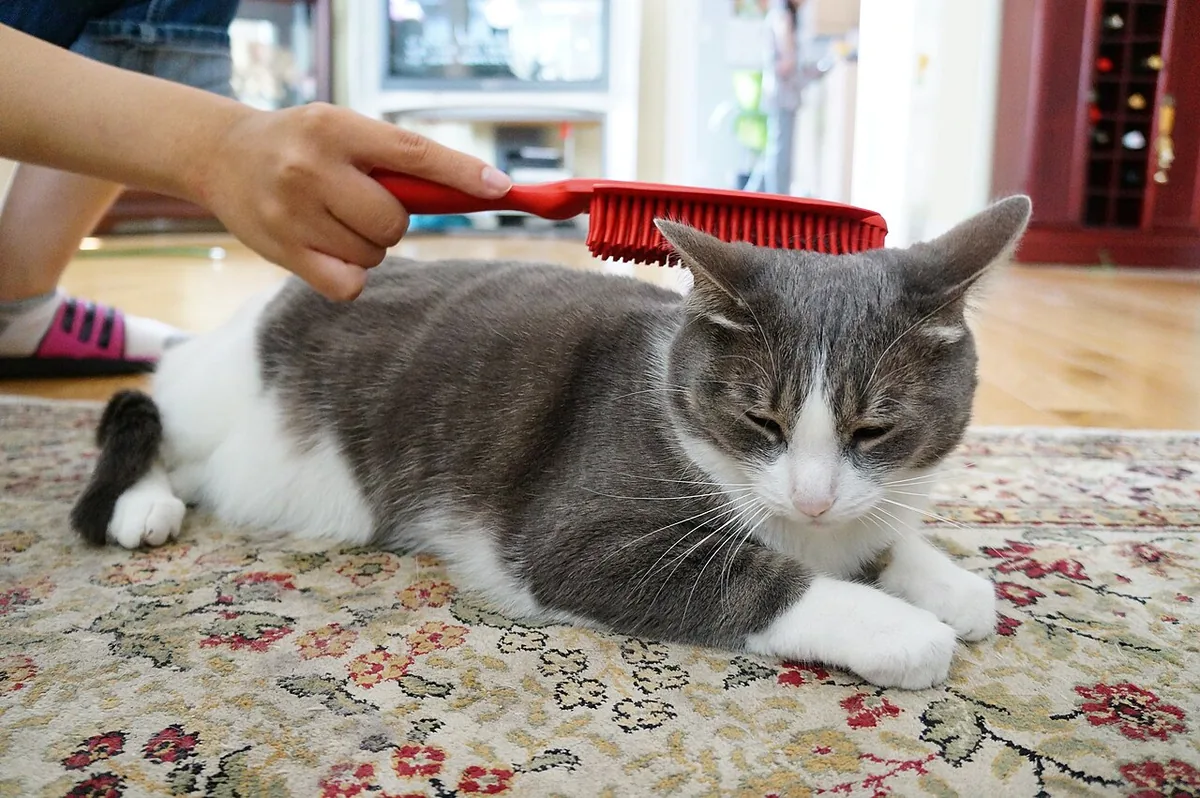
Short-haired cats groom themselves well and need little help, though a weekly brush still cuts down on hairballs and loose fur on the furniture. Long-haired cats need the real work: a daily or every-other-day pass that reaches the undercoat, plus special attention to the places mats form first, the armpits, the belly and behind the ears.
A cat that hates the brush can be taught to tolerate it. Short sessions, a treat after each one, and stopping while the cat is still relaxed all build tolerance faster than holding a struggling cat down for a longer session. When a cat freezes, flattens its ears or starts growling, the session is over. If the coat is already matted, do not pull at the mats with a brush. That hurts, and a hurt cat learns to avoid grooming altogether. Mats that are tight against the skin are a job for a groomer or the vet.
Hairballs come into the picture for indoor cats.
They swallow a lot of loose fur while grooming themselves, and it has to come out somewhere. Regular brushing removes that fur before the cat swallows it, which is why the weekly pass on a short-haired cat is not just about the furniture. Cats that groom themselves constantly are worth watching, because overgrooming can point at skin irritation or stress, and both are vet territory.
Nails
Nail trims are the part most people skip, and the part that matters most for comfort. A dog's nails that touch the floor when standing are too long, and the clicking sound on hard floors is the usual clue. Cats need trims less often, but indoor cats that do not wear their nails down on their own still need them. The safe part of a nail is the pink quick that runs through it. On light nails the quick is visible as a pink line.
On dark nails the quick is not visible at all, which is why the trim should be small: a little at a time, straight across, stopping before the nail starts to feel moist or show the quick. A first trim for a nervous pet can be one nail a day, or one paw, with a treat after each nail. That pace is slower but it works, because the goal is a calm pet that tolerates trims for the next fifteen years, not a perfect trim today.
Before the first real trim, spend a few days on handling only. Touch the paws while the pet is relaxed. Pick up a paw, hold it for a second, put it down, give a treat. Tap the clippers near the paw without cutting. Most pets that resist nail trims are reacting to the restraint, not to the nail, and the handling practice takes the restraint out of the picture.
For cats, the front nails do most of the work on a scratching post, so they often stay shorter on their own. The back nails get less wear and usually need the trim first. A scratching post is the natural way to keep cat nails in check between trims, and cats that use one regularly need far fewer sessions with the clippers.
If the quick is cut and it bleeds, stay calm.
A little pressure with a clean cloth and a styptic product from the pet store handle the usual case, and the nail heals. The bigger mistake is letting the fear from one bad trim end the whole practice. One more practical note: the dewclaw, the nail higher up on the leg, grows without touching the ground and can curl into the skin if it is never trimmed. It deserves a check in the same session.
Ears
Ear checks take ten seconds and should happen with every grooming session.
A healthy ear is pink inside, mostly clean, and free of strong odor. What to look for is simple: redness, swelling, dark discharge, or an odor that makes you notice. Head shaking, scratching at an ear, or flinching when the ear is touched tells you something hurts.
For pets with normal ears, there is usually nothing to clean. Routine deep cleaning is unnecessary and can irritate. If your vet has recommended an ear cleaner, follow their instructions and never push anything into the ear canal, no cotton swabs, no fingers. Floppy-eared dogs and long-haired cats are worth an extra look, because their ear shape or coat holds moisture and dirt close to the ear opening. The check is the same, just more often. A pet that swims or gets bathed regularly gets the same treatment: a quick look after any time the ears get wet.
A 15-minute session, in order
The order below works because it saves the least-liked task for last, when the treats are flowing.
| Task | How often | What to watch for |
|---|---|---|
| Brush the whole coat | Dogs weekly or more, cats weekly, long coats more often | Mats, tangles, skin bumps, fleas |
| Check the ears | Every session | Redness, odor, discharge, head shaking |
| Trim the nails | Every one to two weeks, as needed | The quick, clicking on floors, snagging |
Brush first, because loose hair and tangles are the easiest part and the brushing settles the pet down. Ears next, because they take ten seconds. Nails last, because that is the task most pets resist, and a treat after the final nail ends the session on a good note. Keep the whole session short at the start, five minutes if that is what the pet tolerates, and let it grow as the pet relaxes.
Making the session pleasant
The mood of the session decides most of its success.
Pick a time when the pet is relaxed rather than wound up from a walk or a play session. Sit at the pet's level instead of looming over it. Keep the treats visible and the praise frequent. If the pet is tense, shorten the session and end on a win, a finished paw or a calm minute, so the next session starts without dread.
Timing matters in another way too. Right after a meal, many pets are happy to lie still and be brushed. Right after a bath, the coat is clean but the pet may be done with handling. Learn the window when your pet is calmest and put the grooming there. Some owners fold grooming into an existing quiet habit, like the evening TV time, so the session happens without anyone announcing it. Pets read that as normal, which is exactly the goal.
New pets, seniors and the seasons
Grooming a new pet for the first time
A newly arrived pet needs a gentler introduction to grooming. The first week in a new home is not the time to pin a nervous pet down for a full session. Brush if the pet accepts it, skip the nails until the pet settles, and build the handling slowly. A new cat or dog that has never been brushed can read the whole thing as a threat, and one bad first experience is hard to undo. Our guide to the first 48 hours with a shelter cat covers the settling-in basics that make the first grooming session possible.
In multi-pet homes, grooming sessions can turn into a group event. A dog watching its housemate get brushed often queues up for the same treatment, and grooming one pet in front of the other can keep both calm. The reverse also happens: one pet interrupts, or guards the treats. Keep each session on its own schedule and separate the pets if they compete for attention.
Grooming senior pets
Older pets deserve a gentler version of the same routine. Joints stiffen, so a senior dog may not want to stand for a long brushing session, and a senior cat may groom itself less thoroughly, which means more help needed, not less. Mats on a senior pet are more than cosmetic, because a matted coat hides skin problems and makes movement uncomfortable.
For senior pets, the routine gets shorter and more frequent. A few minutes every few days beats one long monthly session. Watch for new sensitivity during grooming, a flinch where there was none before can be arthritis or a skin problem, and mention it at the next vet visit. Our guide to adjusting care for a senior dog covers the wider set of changes that come with age.
Grooming and the seasons
Coat care changes with the calendar. Shedding peaks in spring and autumn for many breeds, and the brush does more work in those months. Summer heat does not mean a pet needs its coat shaved, the coat insulates against heat as well as cold, and a shaved dog is more exposed to sunburn. Winter brings dry indoor air, which dries skin and makes static cling worse. A little more brushing and a little less bathing through the dry months keep the coat and skin comfortable.
Bathing follows its own rhythm. Most dogs need a bath only when they are visibly dirty or smelly, and most cats never need one at all. Bathing too often strips the natural oils from the coat and dries the skin. When a bath does happen, use a shampoo made for pets, rinse thoroughly, and dry well, especially in the folds of floppy ears.
Common mistakes
The list of common mistakes is short, and the same three show up in almost every grooming conversation.
- Skipping the routine because the pet resists. Resistance is a signal to go slower and shorter, not to give up. Getting groomed in two-minute bursts every day beats being wrestled once a month.
- Cutting nails too short, then quitting. One bleeding quick is fixable. Quitting nail care forever because of it guarantees the next trim is harder, and the nails longer.
- Treating mats and tangles as a brushing problem. A mat that is tight against the skin is not going to brush out. Pulling at it hurts, and scissors near the skin are dangerous. This is the moment to call a groomer or the vet.
One more mistake deserves its own sentence. Ignoring a skin change that the brush reveals, flakes, bald patches, redness, tiny dark specks that could be fleas. The brush is also a health check. When it turns up something new, the answer is a conversation with the vet, not more brushing.
When to ask for help
Some jobs are not home jobs. A heavily matted coat, especially on a cat that is not used to handling, is a groomer's or vet's job. An ear that looks red, smells bad or has discharge is a vet visit, not a cleaning project. Nails that are so long they have curled are also worth a professional first trim, so you can see how short is safe.
Aggression changes the picture. If a pet becomes aggressive during grooming, growling, snapping or hissing, pushing through is the wrong move. That is a stress signal, and the fix is usually slower handling or professional help, not more force. Ask your vet about desensitization or a referral to a groomer who works with nervous pets.
A groomer is also a reasonable regular choice even when home grooming works. Many owners keep a simple home routine for brushing and ears and book a groomer for the nail trims and the occasional deep coat work. When you pick a groomer, ask how they handle a nervous pet and whether they are comfortable with the species you have. There is no rule that says one person does everything, and the pet benefits most from being handled calmly by whoever is doing the job.
If grooming becomes a fight every single time, stop and ask why. It may be pain: a dog with sore hips does not want to stand for a brushing, and a cat with a tender ear will not sit still for one. It may be a bad association from a past session. A professional groomer or your vet can look at the pet and help you decide whether the problem is handling, health, or the tool you are using.
Cost is a fair question when a groomer is on the table.
Prices vary a lot by region and by coat, so ask what the quoted price includes, the bath, the blow-dry, the nails, the ears. A groomer who cannot say what is included is not the right groomer.
For the next 24 hours, do this: pick a day and a spot, put the brush and clippers where you can see them, and run one five-minute session that ends on a treat. One small win today makes next week's session easier.
Where the guidance in this article comes from (retrieved 2026-09-16):
- AKC, "Dog Grooming at Home: Brushing, Bathing, and Nail Care"
- Cornell Feline Health Center, Feline Health Topics (grooming and claw care)
- AVMA, Pet Care resources
- ASPCA, General Pet Care
- Merck Veterinary Manual
Disclaimer: Nothing on this page is veterinary advice. Your veterinarian is the only person who knows your pet's coat, ears and nails, so check with them before changing how you groom or care for your pet. If you ever suspect a medical emergency, call your vet or an emergency animal clinic right away.