Daily Care & Feeding
Wet vs. Dry Cat Food: What Actually Differs
Published September 13, 2026Last reviewed September 16, 2026
There is no single right answer that fits every cat. Moisture, calorie density, storage and cost are all measurable, and once they are laid out side by side the choice becomes a conversation with your veterinarian instead of a brand loyalty test.
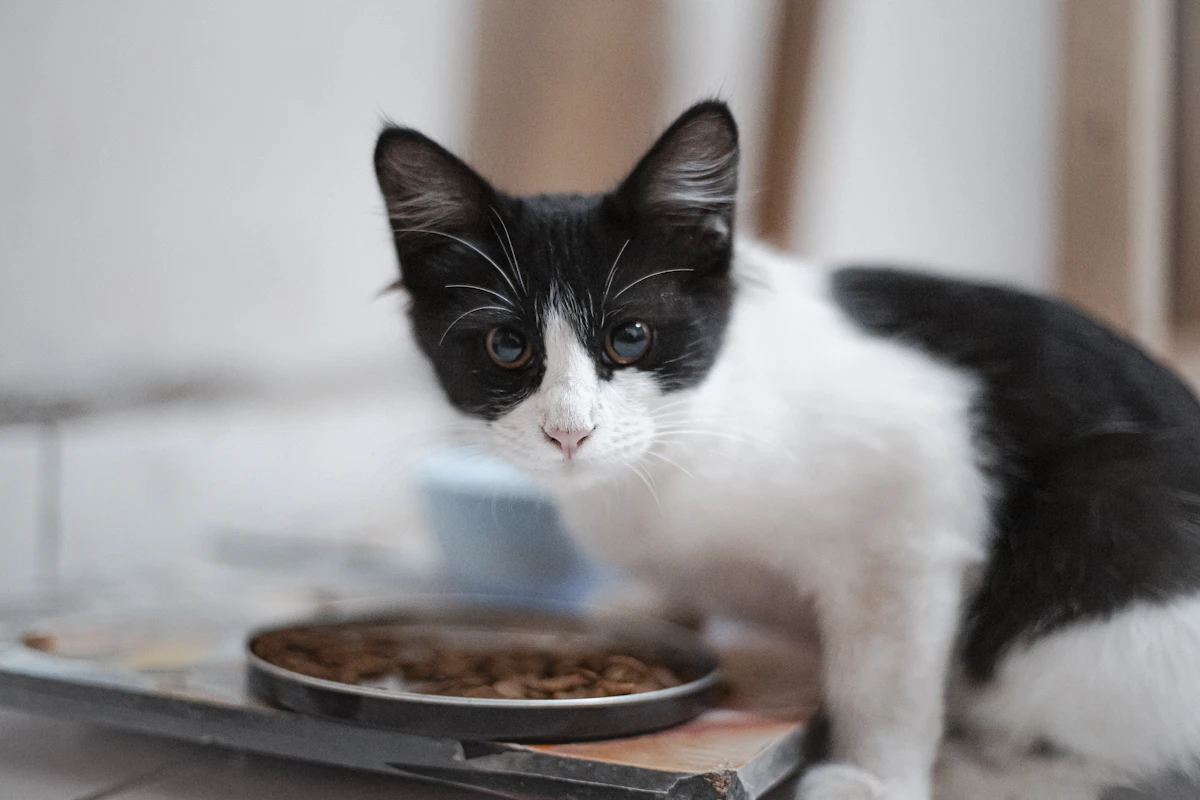
Where they differMoistureCaloriesDentalStorageCost
Friday night, and the kibble bowl is topped up again, the way it has been all week. Your neighbor feeds nothing but cans and swears by it. Your vet said either can work. The question wet or dry usually gets answered like a loyalty test, and that is the wrong way to think about it.
Two healthy cats can eat completely different formats and both be fine, because the two forms of cat food solve different practical problems. One is mostly water. The other is a concentrated store of calories. Neither is automatically healthier for every cat. What matters is how a format lines up with your cat's health history, your schedule and your wallet, and the difference that counts in your household may not be the one on the label.
This guide sticks to what actually differs, moisture, calories, teeth, storage and cost, plus one framework for deciding with your vet instead of guessing.
Start with water
Canned food is roughly 70 to 78% water. Dry food sits near 10% moisture. That single number drives most of the other differences.
Cats evolved with a low thirst drive, which is why veterinary nutrition resources talk about moisture in food as part of a cat's daily water intake. A cat on mostly canned food takes in more water through the bowl. A cat eating dry food can still be perfectly hydrated when fresh water is always available and intake is normal. That depends on the individual cat, and your vet is the one who can say whether extra moisture is genuinely recommended for yours.
Moisture is a measurable fact worth raising with your vet, not a verdict on either format.
One simple check: how often does the water bowl actually get lower? If it barely moves for days while the cat looks well, mention it at the next visit.
A quick comparison at a glance
| Difference | Canned (wet) | Dry kibble |
|---|---|---|
| Moisture | roughly 70–78% | near 10% |
| Calories per gram | lower | higher |
| Open storage | fridge, a day or two | sealed, cool and dry, weeks |
| Cost per calorie | higher in most markets | lower in most markets |
| Portioning | fixed per can or half-can | easy to measure by weight |
| Dental effects | none claimed | partly true, not a substitute for care |
Read the rows as directions, not absolutes. Brands differ, recipes differ, and the numbers on your specific bag govern.
Keep two caveats when you scan the rows. The moisture figure is a range, not a promise, and the dental column is a caution, not a feature. Health history is the vet's call, and the table only describes what each format does at the bowl.
Practical differences that show up in daily life
Calories per mouthful. Gram for gram, dry food packs more calories, because most of the water is gone. The same-looking portion delivers very different energy, and indoor cats on dry food are easy to overfeed without meaning to. Cats that never go outside burn fewer calories, so a bowl that looked right six months ago can start showing up on the scale without any obvious change in habit. Measuring by weight, not by scoop, keeps portions honest either way.
Teeth. Kibble's cleaning effect is only partly true and never a substitute for real dental care.
Storage. Opened canned food has to go in the fridge and be used within the window printed on the label, usually a day or two, while dry food stays usable longer when kept sealed in a cool, dry place. If your routine lets an open can sit in summer heat, that is a real consideration. Cost per day follows the same pattern in most markets, canned food costs more per calorie than dry food of comparable quality, though prices vary enough by store and region that your own shopping list settles it.
Portioning freedom. Dry food measures easily, canned portions are fixed per can or half-can.
Palatability. Many cats eat canned food more readily than kibble, which matters for picky eaters and for cats whose appetite is fading with age. The reverse matters too: a cat that inhales every meal may do better with a measured kibble portion it cannot bolt. Owners of older cats often notice a shift toward canned food as appetites fade, and that observation is worth sharing at a checkup. Watch how your cat actually eats rather than assuming the pricier format wins.
Kittens, seniors and life stages
The life stage on the label matters more than the format. A kitten needs food formulated for growth, a senior cat may need a different calorie and nutrient balance, and both statements should match the life stage line on the package. Format and life stage are separate decisions, and it is possible to feed a wet kitten food or a dry senior food, as long as the label matches the cat.
Weight is the honest monitor. Ribs you can feel easily, or a belly that does not compress, are both worth the vet's eye.
How often you reassess changes with life stage too. A kitten outgrows its food within months, while a middle-aged cat can stay on the same formula for a long stretch. A kidney or dental diagnosis in the senior years can reset the whole conversation. Teeth can reshape the format choice just as much: a cat with sore gums may chew kibble less and lean on canned food, while a healthy mouth handles either fine, and the mouth often changes before the label does. Recheck the label at every vet visit, and mention the mouth when eating habits shift.
A decision framework: four questions that settle most debates
Instead of asking which is better, ask these four.
- What does your cat's health history suggest? Weight, kidney or urinary conditions, and dental health all change the recommendation. Only your vet can weigh these.
- How does your cat actually drink? If water intake is low or the cat is a picky drinker, a moisture-rich food may be worth discussing, with your vet.
- What will you actually keep doing every day? The best food is the one you can store, afford and portion correctly for years. Consistency beats a perfect-on-paper choice you abandon.
- What does the label promise versus deliver? Ignore adjectives such as premium and natural, and check whether the food is formulated to meet AAFCO nutrient profiles for your cat's life stage.
Multi-cat households, grazers and portioning
Homes with several cats complicate the format choice, because each cat eats from the same bowls. If one cat needs a moisture-rich food for a health reason and another does not, ask your vet how to manage the shared bowl situation. Separate feeding stations in separate rooms work for many households, and timed meals rather than free feeding make it possible to know who ate what. Most cats adapt to two or three set mealtimes without much fuss, which protects each cat's share and makes weight changes easier to explain. If one cat is on a special diet, the door-closed feeding room is often the simplest way to keep the wrong bowl out of reach.
A grazer, a cat that nibbles through the day, is usually easier with dry food left in a measured daily portion. Canned food left out for hours in warm weather is not a good idea, and a grazer plus an open can is a recipe for waste or spoilage. If you want to add moisture for a grazing cat, some owners offer a small canned portion as a scheduled meal alongside the measured dry.
Scoops lie in two directions at once. The same scoop holds different weights of different foods, and a heaped scoop holds more than a level one, so a small kitchen scale removes the guesswork and makes portions repeatable from week to week. Calorie needs drift as well. Activity changes with the seasons, with age and with health, and the portion that was right three months ago may not be right now. Weigh your cat regularly, keep a simple note of the number, and adjust portions in small steps, checking in with your vet whenever the change is more than small.
Bowl appearance is a weak calorie signal. A grazer stretching meals across the day can eat more than a scheduled feeder. Log what goes in over a full day. Empty by evening usually means too little, and food that keeps accumulating usually means too much.
Common feeding mistakes
A sudden swap from one food to another can upset a cat's digestion. Most veterinary nutrition guidance recommends a gradual transition, mixing increasing amounts of the new food with the old across several days. Your vet can confirm the right pace and any cautions for your cat. Watch appetite and litter box habits during the change. If anything looks off, check in with your vet rather than pushing through. A cat that stops eating for more than a day or two needs a phone call, not another week of mixing.
Beyond the switch, four mistakes keep coming up.
- Treating the format decision as permanent. Cats adapt to reasonable changes made gradually, and life stages, health changes and simply getting older can all shift what the right food looks like.
- Free-feeding dry food while also giving canned meals. A cat that grazes all day and gets extra canned portions on top ends up with more calories than anyone planned. If you mix formats, count the total, which usually means measuring the dry portion too.
- Trusting a scoop over a scale. Scoops compress and kibble density varies between bags, so the same scoop can deliver noticeably different weights. A kitchen scale costs little next to a weight problem that took months to build.
- Ignoring the label's life stage. An adult-maintenance food for a growing kitten or a senior misses the nutrient targets that matter at that age, whichever format it comes in.
Questions owners ask before switching food
What if my cat is a light drinker? Wet food can help, because canned food is roughly 70 to 78% water and moves some of the day's fluid into the meal itself. Whether your cat needs that help depends on its overall water intake, so raise it with your vet before you switch.
Does dry food really clean teeth? Only partly, and it is not a substitute for dental care. Ask your vet what your cat's teeth actually need.
Can I feed a mix of wet and dry? Many vets suggest exactly that, dry for scheduled meals plus canned for moisture and variety. The catch is counting total calories, including the dry portion.
What if my cat suddenly refuses a food it has loved for months? Sudden refusal is worth a call to your vet. It can be the food itself, but it can also be teeth, nausea or something else worth checking.
Is the more expensive food better? Not automatically. Price tracks marketing, sourcing and manufacturing choices as much as nutrition, and a mid-priced food that meets AAFCO nutrient profiles for your cat's life stage can be the right choice. Compare the guaranteed analysis and the life stage line rather than the price tag, and keep in mind that a format you can feed consistently is part of the equation too.
How long does an opened can keep? Usually a day or two in the fridge. Check the window on the label and do not leave wet food out for hours in warm weather.
What to do in the next 24 hours
Weigh your cat once on a kitchen scale and note the number. Read the current bag or can, and check whether the life stage on the label matches your cat's actual weight. If you have been topping up a scoop by eye, weigh one portion to see what the scoop really holds. Book nothing yet. This is a gather-the-facts day. Take the numbers and the label to your next vet visit, along with the four questions above, and write the open date on the bag so nothing sits past its best-by window. For a line-by-line reading of the label, the reading pet food labels guide walks through the guaranteed analysis and the AAFCO statement.
References behind this guide (retrieved 2026-09-16):
- Cornell Feline Health Center, "Feeding Your Cat"
- AAFCO, "Understanding Pet Food"
- FDA, "Pet Food"
- AVMA, "Pet Care Resources for Owners"
- Merck Veterinary Manual
Disclaimer: This guide is educational only and is not a substitute for veterinary advice. Work with your veterinarian before changing your cat's diet or acting on a health concern, and if you think your cat is in an emergency, call your vet or the nearest emergency animal hospital without delay.